Richter: The High-Velocity Typeface for Modern Design
When you need to inject raw energy and forward momentum into a design, typography is your secret weapon. A static, traditional serif or a friendly sans serif might not cut it for a project that demands attention and screams action. This is where a typeface like Richter enters the scene, not just as a font, but as a design force. It’s built for moments that matter, for brands that compete, and for visuals that need to land with impact and precision.
More Than a Font: A Tool for Visual Storytelling
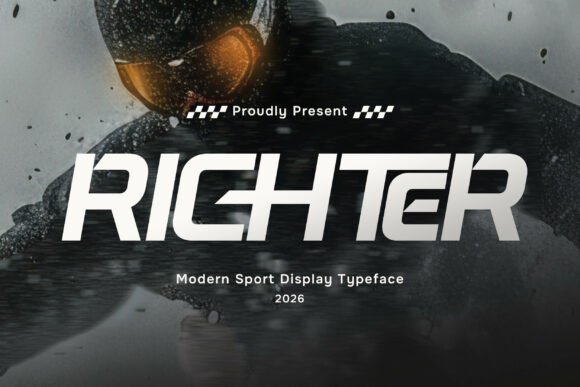
At its core, Richter is a premium display typeface. Think of it as the typography equivalent of a high-performance engine. Its aggressive, forward-leaning character architecture and sharp, aerodynamic terminals aren't just stylistic choices; they’re functional design elements that communicate speed, power, and cutting-edge technology. The slant isn't just decorative—it creates a sense of motion even on a static page or screen. This makes it an invaluable asset for designers working on automotive branding, extreme sports logos, or the visual overlays for competitive gaming streams where every millisecond of visual impact counts.
But its utility extends far beyond the racetrack or the gaming arena. The structural integrity of the Richter typeface is a key practical benefit. In the chaos of a high-action background image—a blurred race car, a surfer cutting through a wave, a dynamic cityscape—this font remains crystal clear. Your message won't get lost in the noise. This clarity under pressure is what separates a good display font from a great one, making Richter a reliable choice for event posters, jersey numbering, and digital broadcast graphics where readability is non-negotiable.
Where Kinetic Energy Meets Practical Design
The true test of any creative font is its real-world application. How does it perform across different projects and mediums? Richter’s futuristic, "techno-sport" aesthetic opens up a specific but powerful range of possibilities. It pairs exceptionally well with certain textures and color palettes—imagine it layered over metallic finishes, carbon-fiber backgrounds, or set against a neon-lit, synthwave-inspired color scheme. This pairing capability is a huge advantage for creating cohesive brand identities.
Consider a new fitness supplement launch. The packaging needs to communicate potency, innovation, and results. Using Richter for the product name and key claims on the box or bottle immediately sets a tone of advanced science and athletic performance. For a world-class racing team, this typeface becomes the cornerstone of their visual identity, from the logos on their cars and merchandise to the typography on their website and social media graphics. It provides the cutting-edge authority needed to be perceived as a leader.
Its applications are diverse and project-driven:
- Branding & Logo Design: Create a memorable logotype for a sports tech company, an athletic apparel line, or a high-energy drink.
- Editorial & Packaging: Use it for pull quotes in a magazine spread about extreme sports or for headlines on packaging for performance gear.
- Digital & Social Media: Design attention-grabbing thumbnails for YouTube videos, bold headers for website hero sections, or dynamic text overlays for Instagram Reels and TikTok videos.
- Print & Merchandise: From event posters and concert flyers to custom t-shirt designs and sports jerseys, it adds a professional, high-octane edge.
- Marketing Assets: Elevate the look of digital ads, email newsletter headers, and presentation slides with a font that commands attention.
Pairing and Practicality: Using Richter Effectively
A powerful tool requires a skilled hand. While Richter dominates a layout, it’s best used strategically. It’s a headline font, not a body copy font. For body text, you need a complementary typeface that is highly readable at smaller sizes. This is where font pairing becomes critical. A clean, geometric sans serif font often provides the perfect counterbalance, offering clarity and calm for paragraphs of information while letting Richter handle the bold, introductory statements.
Before committing to a project, always test your font pairings. Create a mock-up with your headline in Richter and your body copy in a potential companion font. Does the contrast feel intentional and balanced, or does it create visual tension? Readability should be your north star. While the font itself is engineered for clarity, its impact is maximized when it has enough breathing room. Avoid using it in long sentences at small sizes or in busy, cluttered compositions.
It’s also worth exploring the full library of stylistic features available. With PUA (Private Use Area) encoding, you often get access to alternate characters, ligatures, and swashes that can add a unique flair to your design. Reviewing the included font styles—whether it comes in multiple weights, obliques, or condensed versions—gives you more flexibility to fine-tune the visual hierarchy and adapt the typeface to different layout constraints.
Making the Strategic Choice for Your Project
Choosing a font is a strategic decision that impacts brand recognition, audience engagement, and the overall professional presentation of your work. Richter isn't the right choice for a law firm’s website or a children’s storybook. Its power lies in its specificity. When your project goal is to communicate speed, innovation, competitive spirit, and modernity, it becomes an exceptional asset.
For designers, marketers, and entrepreneurs, investing in a high-quality, commercial font like this is an investment in your brand’s visual toolkit. It ensures consistency across all touchpoints, which is fundamental to building strong brand recognition. When a customer sees that distinctive, forward-slanting typeface on a product, a social media post, and a website, they begin to associate that visual style with your brand’s core values.
Ultimately, typography is about visual communication. The right typeface does more than display words; it conveys emotion, sets a mood, and tells a story before the first sentence is even read. By understanding a font’s personality and its intended applications, you can make informed choices that elevate your designs from merely competent to truly compelling. For projects that need to cross the finish line first, a typeface built for velocity and precision is your most reliable starting block.