Party Blocks: Adding Festive Flair to Your Creative Projects
There's something undeniably joyful about blocky, playful typography. It instantly conjures up images of childhood parties, colorful banners, and celebratory moments. If you've been searching for a typeface that captures that exact spirit without being overly childish or complex, the Party Blocks font might just be the missing piece in your design toolkit. This decorative display font is built for moments that call for energy, fun, and a touch of whimsy, making it a surprisingly versatile asset for a wide range of creative endeavors.
Understanding the Visual Appeal of a Blocky Display Font
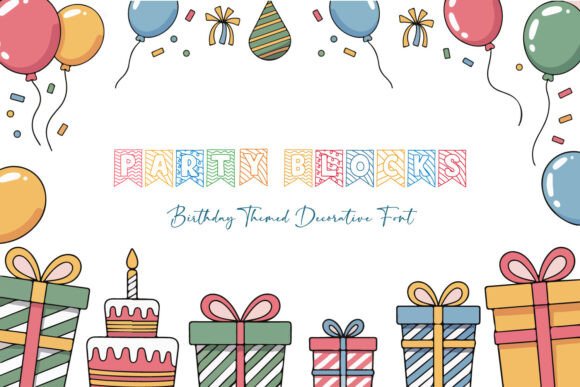
At its core, Party Blocks is a single-color, decorative typeface. This is a crucial point for designers: it's not a pre-colored or multi-layered font. Its power lies in its form—solid, rounded, and friendly letterforms that resemble stacked toys or building blocks. This simplicity is its strength. Because it renders as a standard font, you have complete control over its color, allowing you to seamlessly integrate it into any brand palette or design theme. You can apply a vibrant gradient, a classic solid hue, or even a textured fill within your design software, making it adaptable far beyond a typical "birthday" aesthetic.
The character set is designed to maximize that festive feeling. You'll often find stylistic alternates, swashes, and ligatures that let you customize the look of headlines. A word like "Celebrate" can be transformed with a swash on the 'C' or a ligature linking the 't' and 'e', adding a unique, hand-crafted touch. This level of customization helps avoid a generic look, ensuring your designs feel intentional and tailored. It's this blend of a strong, recognizable core style with flexible design options that makes it a valuable premium font choice.
From Party Invitations to Brand Identity: Practical Applications
While the name suggests a specific use, thinking of Party Blocks as merely an "invitation font" would limit its potential. Let's explore how its lively personality can serve different project goals.
For Branding and Logo Design: A bakery specializing in custom cakes, a children's entertainment company, or a boutique event planning service could use this typeface as the cornerstone of their brand identity. Paired with a clean sans-serif font for body text, Party Blocks can create a logo that is immediately approachable and fun. It communicates a brand promise of joy and celebration before a customer even reads the tagline. The key is to use it strategically—perhaps for the main wordmark while a simpler font handles the supporting text—to maintain a professional presentation.
In Packaging and Merchandise: Imagine a line of gourmet popcorn or craft soda. Using Party Blocks on the packaging for a "Party Mix" or "Birthday Cake" flavor instantly signals the product's intended occasion. It’s equally effective on merchandise like tote bags, stickers, or t-shirts for brands targeting a youthful, energetic audience. The font's bold structure ensures it remains readable even at smaller sizes on physical products, a critical consideration for packaging design.
Across Digital and Print Marketing: For social media graphics, this typeface can stop the scroll. Use it for announcements like "SALE!" or "New Arrival," or for creating engaging Instagram Stories and Reels covers. On websites and blogs, it's perfect for section headers that need to inject energy without compromising the readability of the paragraph text below. For print materials, think beyond invitations to flyers for community events, posters for local fairs, or eye-catching headers in a newsletter.
Pairing and Readability: Making It Work in a Professional Context
The most common question with a bold, decorative font is: "How do I use it without making my design look cluttered?" The answer lies in thoughtful pairing and context. Party Blocks should almost always be a headline or accent font. Its visual weight is designed for impact, not for sustained reading.
For a balanced and modern typography hierarchy, pair it with a neutral, highly readable serif or sans-serif font. A clean sans-serif like Montserrat or Open Sans creates a contemporary, friendly contrast. A classic serif like Lora or Merriweather can add a touch of elegance, softening the playfulness for a more sophisticated application. The goal is to let the display font do the "shouting" for headlines and calls-to-action, while the paired font handles the "conversational" body copy with clarity.
Always test your pairings at the intended size. A headline that looks great at 72pt might lose legibility at 24pt on a mobile screen. Review the font's included styles—does it have a bold weight that maintains its character? Checking these details ensures your final design maintains both visual appeal and functional readability across all platforms, from a tiny favicon to a large-format poster.
Considering Licensing and Long-Term Value
Before integrating any font into a commercial project, understanding the license is non-negotiable. A high-quality, commercially licensed font like Party Blocks typically comes with clear terms that allow for use in logos, products, and marketing materials for both personal and client projects. This is what separates a professional design asset from a free font that may have restrictive or unclear usage rights. Investing in a properly licensed creative font protects you and your clients legally and ensures the font creator is supported, allowing them to continue developing valuable resources for the design community.
Ultimately, the value of a font like Party Blocks lies in its ability to evoke a specific emotion instantly. It's a tool for visual communication that says, "This is a moment for fun." By using it judiciously—pairing it wisely, applying it to the right contexts, and respecting its licensing—you can leverage its joyful blocky style to create designs that are not only visually engaging but also strategically effective in connecting with an audience seeking that very sense of celebration.