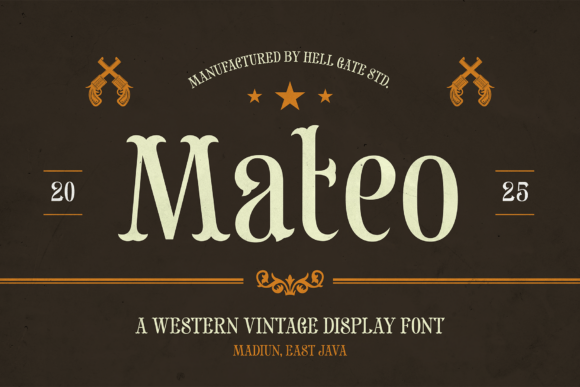
Mateo: Bringing Bold Western Character to Your Design Projects
You know that feeling when you're scrolling through a sea of generic sans-serifs, and suddenly a typeface stops you dead in your tracks? That's what Mateo does. This Western vintage display font doesn't whisper—it announces itself with a confident, robust presence that demands attention. If you've been searching for something that carries genuine personality without sacrificing quality, Mateo might be the missing piece in your design toolkit.
What makes this typeface stand apart from countless other display fonts flooding the market? It's the balance. Mateo channels that rugged, frontier-era aesthetic but filters it through contemporary design sensibilities. The letterforms feel substantial and grounded, with enough visual weight to anchor headlines and logos without becoming clumsy or illegible. There's a boldness baked into every curve and serif that communicates strength, authenticity, and a touch of nostalgia.
Where Western Charm Meets Modern Versatility
Let's be honest about what Mateo is and what it isn't. This isn't your everyday body text font. You wouldn't set a 500-word blog post in it and expect comfortable reading. But that's precisely the point. Display fonts like Mateo exist for moments of impact—the logo that needs to tell a story in three seconds, the packaging that has to leap off a crowded shelf, the social media graphic competing for a fraction of someone's scrolling attention.
The Western vintage character of this typeface opens doors to projects that need an unmistakable sense of place and personality. Think about craft breweries building a brand around rugged authenticity. Consider outdoor adventure companies, barbecue restaurants, country music festivals, or artisan leather goods shops. Mateo speaks their visual language fluently. But here's where it gets interesting: this font also works beautifully for projects that simply need bold confidence without any literal Western theme. A tech startup launching a disruptive product? A podcast about underdog stories? A fitness brand built on grit and determination? Mateo handles all of these with surprising grace.
Practical Applications That Actually Work
Let's talk specifics, because vague promises about "elevating your designs" don't help anyone make real decisions.
Logo design and brand identity: This is where Mateo truly shines. The font's strong personality gives logos instant memorability. When someone sees your brand name set in this typeface, they form an immediate impression—bold, trustworthy, unapologetic. For small businesses building their first visual identity, pairing Mateo with a clean sans-serif for supporting text creates a professional system that feels cohesive without being monotonous.
Packaging design: Whether you're designing labels for a small-batch hot sauce, artisan coffee bags, or handmade candles, the vintage Western aesthetic communicates craftsmanship and care. Mateo's high-quality rendering ensures that your typography looks sharp whether it's printed on kraft paper, glossy labels, or matte boxes.
Social media graphics: Instagram posts, Facebook headers, Pinterest pins, YouTube thumbnails—these platforms are brutal environments where content disappears in milliseconds. A display font with genuine character gives your graphics a fighting chance. Mateo works especially well for quote graphics, announcement posts, sale promotions, and event marketing where a single headline needs to carry the entire message.
Print materials and posters: Event posters, flyers, business cards, and menu designs all benefit from a typeface that commands space. The robust letterforms of Mateo reproduce beautifully in print, maintaining their visual impact even at larger sizes where lesser fonts reveal their flaws.
Merchandise and invitations: From wedding invitations with a rustic theme to custom t-shirt designs, from brewery merchandise to rodeo event programs, this font brings an authentic vintage quality that feels intentional rather than trendy.
Getting the Most From Your Typography Choices
Choosing the right font style for a project isn't just about personal taste—it's about communication. Every typeface carries emotional baggage, and understanding that baggage helps you make smarter design decisions. Mateo carries associations with the American West, with strength, with tradition, and with bold self-expression. Those associations are assets when they align with your project goals and potential liabilities when they don't.
Before committing to any display font, ask yourself a few practical questions. Does this typeface match the emotional tone of my project? Will my audience recognize and respond to the visual cues this font communicates? Can I pair it effectively with other fonts in my design system? Is it legible at the sizes I need it to perform?
Font pairing deserves special attention. Mateo's strong personality means it works best alongside typefaces that complement rather than compete. A simple, geometric sans-serif provides clean contrast for body text. A subtle serif can bridge the gap between Mateo's vintage character and more traditional content. Avoid pairing it with other heavily stylized fonts—two strong personalities in one design usually results in visual chaos rather than creative tension.
Readability, Licensing, and Real-World Considerations
Even the most beautiful display font becomes useless if people can't read it. Mateo's designers clearly prioritized legibility within its stylistic framework, which is worth acknowledging. The letterforms maintain clear distinction from one another, even at smaller display sizes. That said, always test your specific application. Set your actual text—your real business name, your real headline, your real tagline—and evaluate it at the size and medium where it will actually appear. A font that looks stunning in a 200-pixel preview might behave differently at 24 points on a printed business card.
The OTF file format included with Mateo ensures broad compatibility across design software, from Adobe Creative Suite to free alternatives. This matters more than people realize. A premium font that only works in one application creates friction in your workflow. OpenType features provide flexibility for refined typographic details when your project calls for them.
Commercial licensing is another practical consideration that deserves upfront attention. If you're using Mateo for client work, merchandise, or any commercial application, verify that your license covers those specific uses. Understanding licensing terms before you build a brand identity around a particular font prevents expensive headaches later. Most quality font foundries offer clear licensing structures—just make sure you read them.
Making a Statement Without Saying a Word
Typography does heavy lifting in visual communication. It sets mood before anyone reads a single word. It establishes credibility, signals values, and creates emotional connections that pure information cannot. Life genuinely is too short for boring fonts, especially when you're trying to build something that matters—a brand, a business, a creative project that reflects who you are and what you stand for.
Mateo Western Display Font offers a specific tool for a specific kind of impact. It won't solve every typographic challenge you face, and it shouldn't try to. What it does exceptionally well is bring vintage Western character, bold visual presence, and professional-quality rendering to projects that need exactly those qualities. Whether you're designing a logo for a startup, creating packaging for a small-batch product, building social media graphics that stop the scroll, or developing a complete brand identity, having a typeface like Mateo in your collection means you're prepared when a project calls for something with genuine attitude and unmistakable character.