Inject Playful Energy: The Rainbow Stacked Typeface for Designers
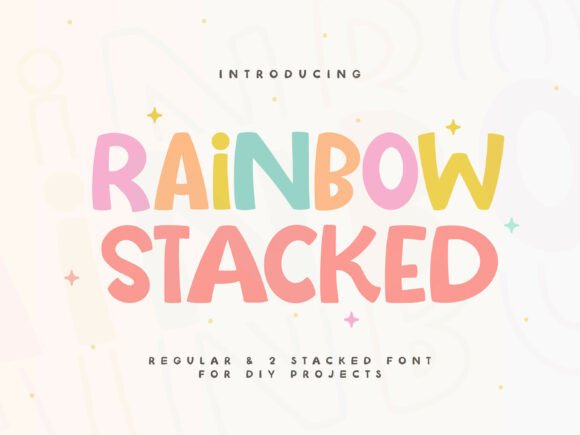
There is a specific kind of energy that certain designs exude—an infectious, unapologetic joy that grabs attention and refuses to let go. If you have ever struggled to find a typeface that captures the spirit of a child’s birthday party, the excitement of a summer festival, or the boldness of a streetwear brand, you know how rare that energy is to bottle. Enter the Rainbow Stacked font, a thick, bubbly typeface that serves as an instant mood-lifter for any visual project. This isn't just another display font; it is a design asset engineered for maximum creativity, offering a specialized "stacked" version that allows you to build multi-colored, layered text effects without the headache of complex kerning or alignment.
The Anatomy of Joy: Understanding the Stacked Effect
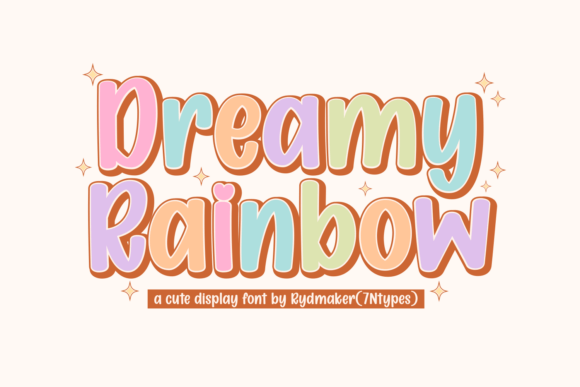
At first glance, the Rainbow Stacked typeface feels familiar, echoing the friendly, rounded shapes of classic sans serif fonts but amplified with a chunky, modern twist. However, the true genius of this font lies in its construction. Most premium fonts come in standard weights, but Rainbow Stacked includes a specialized layering system. You essentially have a shadow layer and a top layer that interlock perfectly. This allows you to assign different colors to different parts of the letter, creating a 3D, prismatic effect that looks incredibly complex but is actually quite simple to execute.
For visual communicators, this solves a massive problem: achieving depth. Flat design has its place, but when you are designing for merchandise, packaging, or social media, you need typography that pops off the screen. The "stacked" mechanism gives you that instant dimensionality. Whether you are creating a logo for a toy brand or designing a header for a lifestyle blog, the ability to layer colors instantly transforms a flat sentence into a dynamic visual statement.
Beyond the Birthday Card: Versatility in Modern Branding
It is easy to pigeonhole a font like this as strictly for children’s products or birthday party decor. While it excels there, dismissing it for adult-oriented projects would be a mistake. In the current landscape of brand identity, "joy" is a currency. Brands are moving away from sterile, corporate minimalism toward warmer, more human aesthetics. The Rainbow Stacked typeface fits perfectly into this shift, particularly for small business owners and entrepreneurs looking to differentiate themselves.
Consider a boutique ice cream shop, a summer music festival, or a colorful stationery brand. Using this font for packaging design or logo design immediately signals to the customer that the brand is approachable, fun, and creative. It works exceptionally well for:
- Event Branding: Creating posters and invitations that demand attention.
- Merchandise: Designing custom t-shirts and tote bags where the thick outlines make weeding vinyl a breeze.
- Digital Products: Making e-book covers or online course graphics that stand out in a crowded feed.
The key is to look at the font’s personality. It is loud and confident. If your brand voice is energetic and youthful, regardless of the age of your audience, Rainbow Stacked can be a powerful tool in your design assets library.
Practical Application: How to Use Rainbow Stacked Effectively
As a design tool, typography requires more than just selection; it requires implementation. The Rainbow Stacked font is designed for ease of use, particularly for those working with vinyl cutters or digital design software like Adobe Illustrator or Canva. Because the letters are thick and bubbly, they have smooth outlines that are incredibly easy to "weed"—the process of removing excess vinyl from your cut design. This makes it a favorite for crafters, but professionals will appreciate the clean lines in digital formats as well.
When using this font for editorial design or web design, readability is a factor to consider. Because it is a display font, it is best suited for headlines, sub-headers, and call-to-action buttons rather than long blocks of body copy. Pairing it with a clean sans serif font for your paragraph text is a classic strategy. The contrast between the playful, heavy Rainbow Stacked headlines and the neutral, legible body text creates a hierarchy that guides the reader’s eye naturally.
Here are a few practical tips for integrating Rainbow Stacked into your workflow:
- Color Theory: Don't just stick to the rainbow. Use the stacking feature to combine pastel tones for a vintage look, or high-contrast neons for a cyberpunk vibe. The font handles gradients and solid blocks of color equally well.
- Spacing: Because the letters are rounded and thick, you can often tighten the tracking (letter spacing) slightly to make the colors blend together more seamlessly, enhancing the "stacked" illusion.
- Context Matters: If you are designing for a corporate client, this font is likely too casual. However, for a side-hustle selling stickers on Etsy or a marketing campaign for a new soda brand, it is the perfect choice.
Building a Visual Ecosystem: Font Pairing and Consistency
No font is an island. To truly master the Rainbow Stacked typeface, you need to think about its ecosystem. Brand recognition relies on visual consistency. If you use Rainbow Stacked for your logo, you need to ensure the rest of your typography supports it without fighting it. Avoid pairing it with other "loud" fonts like heavy script fonts or decorative serifs. Instead, lean into the contrast.
A geometric sans serif works beautifully here. Think of fonts like Futura, Montserrat, or even a simple, clean sans serif to let Rainbow Stacked be the star of the show. This balance ensures that your marketing assets—whether they are social media graphics, email headers, or print materials—look professional rather than chaotic.
Furthermore, consider the medium. On a website, this font can be used for hero section headers to create an immediate emotional connection. On a t-shirt, the thick outlines ensure the design remains legible even from a distance. The versatility of the file formats usually included with premium fonts like this (often including OpenType features) allows you to customize the swashes or ligatures, adding that extra layer of polish that separates amateur designs from professional ones.
The Commercial Advantage: Licensing and Creativity
For entrepreneurs and content creators, the legal side of design assets is just as important as the aesthetic. When investing in a creative font like Rainbow Stacked, it is vital to review the commercial licensing. Most premium fonts offer different tiers for desktop use (creating logos, prints) and web use (embedding fonts in code). Ensuring you have the correct license protects your business down the line.
Ultimately, the value of the Rainbow Stacked typeface lies in its ability to communicate emotion instantly. In a world of endless scrolling, this font stops the thumb. It adds a layer of whimsy to a classroom worksheet, a spark of excitement to a birthday invitation, and a bold statement to a startup’s branding kit. By understanding its strengths—its easy layering, its weed-friendly outlines, and its universally friendly shapes—you can turn ordinary text into a masterpiece of color and fun. Whether you are a seasoned graphic designer or a hobbyist just starting out, adding this typeface to your toolkit is an investment in creativity that pays dividends in smiles.